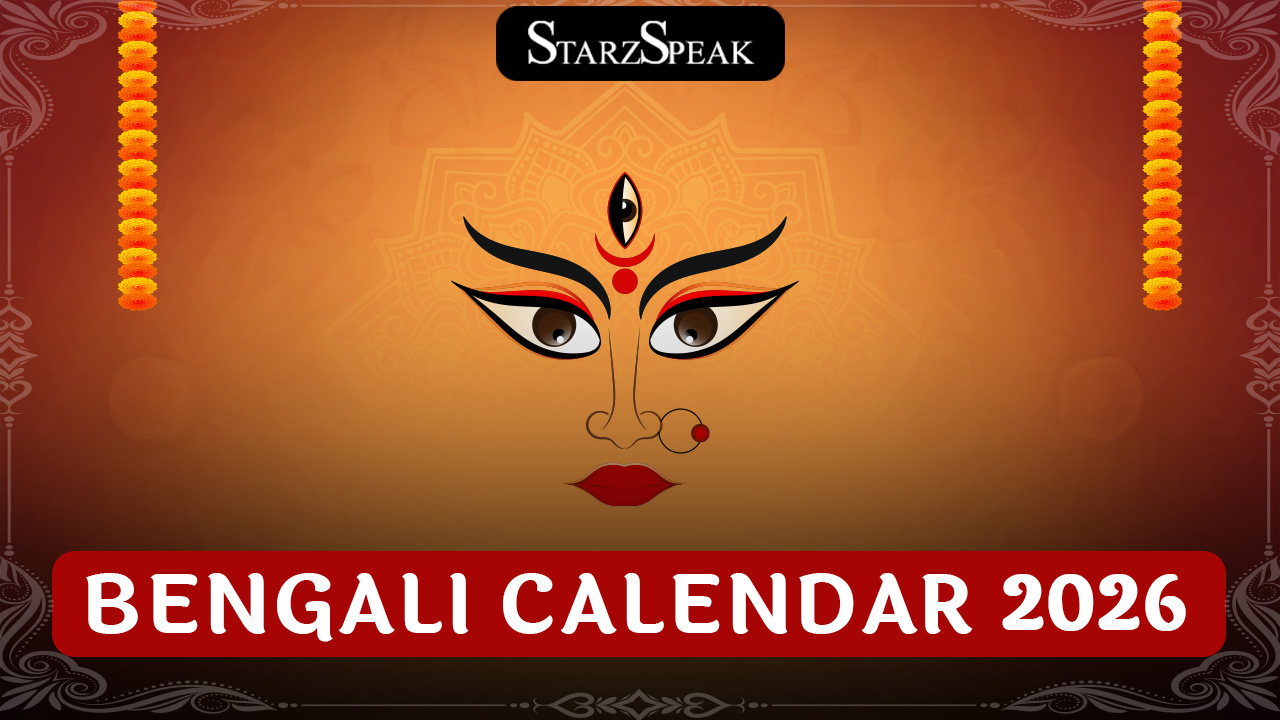
The Bengali Calendar 2026, commonly referred to as the Bangla Panjika, remains a vital cultural, religious, and social institution in Bengali society. Rooted in centuries-old traditions, the calendar is closely aligned with agricultural cycles, seasonal changes, and spiritual observances. Across West Bengal, Tripura, Assam, and Bengali communities worldwide, the Bengali calendar remains a trusted guide for festivals, rituals, business activities, and important life events.
The Bengali calendar is based on a solar system, ensuring that festivals remain in sync with the natural cycle. Each month carries symbolic meaning, reflecting Bengal's deep connection with its land, faith, and cultural heritage.
Festival of January
|
Date |
Day |
Festival \ Holiday |
|---|---|---|
| 01-Jan-26 | Thursday | Pradosh Vrat |
| 03-Jan-26 | Saturday | Poush Purnima |
| 06-Jan-26 | Tuesday | Sankashti |
| 14-Jan-26 | Wednesday | Uttarayan/ Makar Sankranti |
| 15-Jan-26 | Thursday | Magh Bihu |
| 16-Jan-26 | Friday | Pradosh Vrat |
| 18-Jan-26 | Sunday | Magh Amavasya |
| 23-Jan-26 | Friday | Basant Panchami |
| 29-Jan-26 | Thursday | Jaya Ekadashi |
| 30-Jan-26 | Friday | Pradosh Vrat |
Festival of February
|
Date |
Day |
Festival \ Holiday |
|---|---|---|
| 01-Feb-26 | Sunday | Magh Purnima |
| 05-Feb-26 | Thursday | Sankashti Chaturthi |
| 13-Feb-26 | Friday | Kumbha sankranti, Vijaya Ekadashi |
| 14-Feb-26 | Saturday | Pradosh Vrat |
| 15-Feb-26 | Sunday | Maha Shivaratri |
| 17-Feb-26 | Tuesday | Phalguna New moon, Surya Grahan |
| 27-Feb-26 | Friday | Amla Ekadashi |
| 28-Feb-26 | Saturday | Pradosh Vrat |
Festival of March
|
Date |
Day |
Festival \ Holiday |
|---|---|---|
| 03-Mar-26 | Tuesday | Dol Purnima, Chandra Grahan*Purn |
| 04-Mar-26 | Wednesday | Holi |
| 06-Mar-26 | Friday | Sankashti |
| 15-Mar-26 | Sunday | Meena Sankranti, Papmochani Ekadashi |
| 16-Mar-26 | Monday | Pradosh Vrat |
| 19-Mar-26 | Thursday | Chaitra Navratri |
| 20-Mar-26 | Friday | Chaitramoon |
| 26-Mar-26 | Thursday | Ram Navami* Smarta |
| 27-Mar-26 | Friday | Chaitra Navratri Parana |
| 29-Mar-26 | Sunday | Kamada Ekadashi |
Festival of April
|
Date |
Day |
Festival \ Holiday |
|---|---|---|
| 02-Apr-26 | Thursday | Haanuman Jayanti |
| 05-Apr-26 | Sunday | Sankashti Chaturthi |
| 13-Apr-26 | Monday | Baruthini Ekadashi |
| 14-Apr-26 | Tuesday | Mesa Sankranti |
| 15-Apr-26 | Wednesday | pohela Boishakh, Padosh Vrat |
| 17-Apr-26 | Friday | Baisakhi |
| 19-Apr-26 | Sunday | Akshay Tritiya |
| 27-Apr-26 | Monday | Mohini Ekadashi |
Festival of May
|
Date |
Day |
Festival \ Holiday |
|---|---|---|
| 01-May-26 | Friday | Budhha Purnima , Baisakhi Purnimaa |
| 05-May-26 | Tuesday | Sankashti Chaturthi |
| 09-May-26 | Saturday | Rabindr nath Jayanti |
| 13-May-26 | Wednesday | Apara Ekadashi |
| 14-May-26 | Thursday | Pradosh Vrat |
| 15-May-26 | Friday | Vrisabh Sankranti, Taurus Sankranti |
| 16-May-26 | Saturday | Jaishtha Amavasya |
| 25-May-26 | Monday | Ganga Puja |
| 27-May-26 | Wednesday | Padmini Ekadashi |
| 28-May-26 | Thursday | Pradosh Vrat |
| 31-May-26 | Sunday | purnima vrat |
Festival of June
|
Date |
Day |
Festival |
|---|---|---|
| 03-Jun-26 | Wednesday | Sankashti Chaturthi |
| 15-Jun-26 | Monday | Mithun Sankaranti |
| 20-Jun-26 | Saturday | Jamai Shasthi |
| 22-Jun-26 | Monday | Ambubachi Mela |
| 27-Jun-26 | Saturday | Pradosh vrat |
| 29-Jun-26 | Monday | Jaishta purnima |
Festival of July
|
Date |
Day |
Festival \ Holiday |
|---|---|---|
| 03-Jul-26 | Friday | Sankashti Chaturthi |
| 10-Jul-26 | Friday | Yogini Ekadashi |
| 12-Jul-26 | Sunday | Monthly Shivaratri , Pradosh Vrat (Krishna) |
| 14-Jul-26 | Tuesday | Ashadha Amavasya |
| 16-Jul-26 | Thursday | Jagannath Rath Yatra, Kark Sankranti |
| 25-Jul-26 | Saturday | Dev Shayani Ekadashi , Ashadi Ekadashi |
| 26-Jul-26 | Sunday | Pradosh Vrat |
| 29-Jul-26 | Wednesday | Guru Purnima , Ashada Purnima |
Festival of August
|
Date |
Day |
Festival \ Holiday |
|---|---|---|
| 02-Aug-26 | Sunday | Sankashti Chaturthi |
| 09-Aug-26 | Sunday | Kamika Ekadashi |
| 10-Aug-26 | Monday | Padosh Vrat |
| 11-Aug-26 | Tuesday | Monthly Shivaratri |
| 12-Aug-26 | Wednesday | Surya Grahan* Purna |
| 15-Aug-26 | Saturday | Greenery |
| 17-Aug-26 | Monday | Simha Sankranti |
| 23-Aug-26 | Sunday | Shravan Ekadashi |
| 25-Aug-26 | Tuesday | Padosh vrat |
| 26-Aug-26 | Wednesday | Onam |
| 28-Aug-26 | Friday | Raksha Bandhan, Chandra Grahan*Anshika |
| 31-Aug-26 | Monday | Kajari Tej |
Festival of September
|
Date |
Day |
Festival \ Holiday |
|---|---|---|
| 01-Sep-26 | Tuesday | Nag Panchami |
| 04-Sep-26 | Friday | Krishna Janmasthami |
| 07-Sep-26 | Monday | Ekadashi |
| 11-Sep-26 | Friday | Bhadrapad Amavasya |
| 14-Sep-26 | Monday | Ganesh Chaturthi |
| 17-Sep-26 | Thursday | Vishwakarma pooja, Kanya Sankranti |
| 25-Sep-26 | Friday | Ananta Chaturdashi |
Festival of October
|
Date |
Day |
Festival \ Holiday |
|---|---|---|
| 10-Oct-26 | Saturday | Mahalaya |
| 11-Oct-26 | Sunday | Sharad Navratri |
| 16-Oct-26 | Friday | Akal Bodhon, Kalparambha |
| 17-Oct-26 | Saturday | Navapatrika Puja, Tula Sankranti |
| 19-Oct-26 | Monday | Durga Puja Asthami |
| 20-Oct-26 | Tuesday | MahaNavami |
| 21-Oct-26 | Wednesday | Durga Bisharjan, Dussehra |
| 25-Oct-26 | Sunday | Lakshmi Pooja |
Festival of November
|
Date |
Day |
Festival \ Holiday |
|---|---|---|
| 06-Nov-26 | Friday | Dhanteras |
| 08-Nov-26 | Sunday | Dipabali |
| 10-Nov-26 | Tuesday | Govardhan Puja |
| 11-Nov-26 | Wednesday | Bhai Ponta |
| 15-Nov-26 | Sunday | Chhath Puja |
| 16-Nov-26 | Monday | Vrishchika Sankranti |
| 18-Nov-26 | Wednesday | Jagaddhatri Pooja |
Festival of December
|
Date |
Day |
Festival \ Holiday |
|---|---|---|
| 04-Dec-26 | Friday | Utpanna Ekadashi |
| 08-Dec-26 | Tuesday | Margashirsh New Moon |
| 16-Dec-26 | Wednesday | Dhanu Sankranti, Sagittarius |
| 23-Dec-26 | Wednesday | Margashirsh Purnima |
The Bengali year begins with Poila Boishakh, one of the most significant occasions in the calendar. Celebrated with optimism and cultural pride, it represents renewal, prosperity, and fresh beginnings. On this day, homes and workplaces are cleaned, traditional attire is worn, and greetings of "Shubho Noboborsho" are exchanged.
The business community observes Haal Khata, ceremonially opening new account books after offering prayers for financial stability and growth. Families come together to enjoy traditional dishes such as Panta Bhat with Ilish, sweets, and festive meals. Cultural programs featuring Rabindra Sangeet, folk music, and dance further enhance the celebratory atmosphere, making Poila Boishakh 2026 a meaningful start to the Bengali year.
Durga Puja stands as the most prominent and emotionally significant festival in the Bengali calendar. Celebrated during the month of Ashwin, it commemorates the victory of Goddess Durga over Mahishasura, symbolizing the triumph of good over evil.
Durga Puja is both a religious and cultural spectacle. Elaborate pandals, artistically crafted idols, devotional chants, and large-scale cultural performances transform towns and cities into vibrant centers of celebration. Beyond devotion, the festival promotes social unity and artistic expression. The festivities conclude with Bijoya Dashami, marked by sindoor khela, emotional farewells, and the promise of reunion in the following year.
The Bengali calendar also highlights the worship of different manifestations of the Divine Mother. Kali Puja, observed on the new moon night of Kartik, symbolizes power, protection, and the removal of negativity. Illuminated homes and temples create a spiritually charged environment across Bengal.
Lakshmi Puja is associated with prosperity, peace, and household well-being, while Saraswati Puja celebrates knowledge, learning, and creativity. Widely observed in educational institutions, Saraswati Puja 2026 reflects Bengal's long-standing reverence for education, art, and intellectual pursuits.
Seasonal celebrations form a vital part of the Bengali calendar. Nabanna, the harvest festival, marks the arrival of new rice and expresses gratitude toward nature and farmers. It highlights Bengal's agrarian roots and communal harmony.
Poush Parbon, celebrated during winter, is known for family gatherings and traditional delicacies such as pithe, patishapta, and payesh. Dol Purnima, the Bengali version of Holi, is observed with colors, devotional songs, and the worship of Radha and Krishna. Rath Yatra, particularly prominent in Mahesh and coastal regions like Digha, adds to the spiritual and cultural vibrancy of the year.
In addition to religious festivals, the Bengali Calendar 2026 includes cultural observances such as Rabindra Jayanti and Nazrul Jayanti, commemorating the contributions of Rabindranath Tagore and Kazi Nazrul Islam. These occasions celebrate Bengal's literary, musical, and intellectual heritage.
Despite modern lifestyles and digital timekeeping, the Bengali calendar remains highly relevant. It continues to influence marriage dates, religious ceremonies, business inaugurations, and community events. With the availability of digital panjikas and mobile applications, younger generations remain connected to this traditional system.
The Bengali Calendar 2026 is not merely a chronological guide but a living representation of Bengal's cultural identity. Through festivals such as Poila Boishakh, Durga Puja, Kali Puja, and Nabanna, it preserves traditions while adapting to contemporary society. Deeply rooted in spirituality, nature, and artistic expression, the Bengali calendar continues to shape Bengali life with continuity, meaning, and enduring cultural significance.


Unit 303,304,305, Tower 4, DLF CORPORATE GREENS, Southern Peripheral Rd, Sector 74A, Gurugram, Haryana 122004


Powered by Mirth Media Group
Copyright © 2024 StarzSpeak. All Right Reserved.